Digital printing on fabrics: trends and applications for fitness, beachwear, and intimate apparel
07 de September de 2026 • Texneo • Beachwear
See how to apply Digital printing to fabrics for sportswear, beachwear, and underwear collections with technology, style, and performance.

For Summer 2027/28, commercial references point to a renewal of familiar print patterns. Stripes appear with new color combinations and directions, tropical motifs take on a maximalist and sophisticated approach, and florals return in smaller, more delicate versions.
More than simply reproducing a trend, developing a printed collection requires considering how design, colors, fabric, and garment construction relate to one another.
At Texneo, this choice also involves selecting the appropriate process for each composition: polyamide-based fabrics are recommended for digital printing, while polyester-based fabrics are recommended for digital sublimation.
Learn how these technologies work and which trends can inspire upcoming developments.
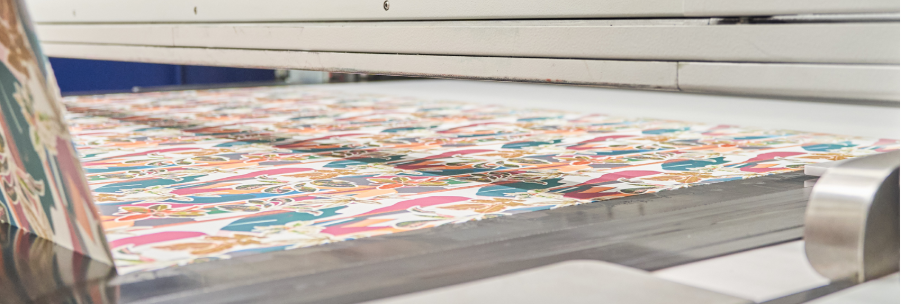
Digital printing: technology in service of creativity
Digital printing expands development possibilities by enabling detailed designs, a wide range of color combinations, and diverse visual concepts.
At Texneo, this process is applied to polyamide-based fabrics, making it possible to combine print development with the fabric’s characteristics and the garment’s specific requirements.
For this reason, selecting a print design should not be done in isolation. It is important to consider factors such as:
• base composition;
• elasticity;
• hand feel;
• print scale;
• color palette;
• the relationship between the design and garment construction;
• application segment;
• the collection concept.
A print may deliver excellent results when viewed on the fabric and behave differently once applied to a garment with panels, cutouts, or areas subject to greater stretch.
Planning these factors from the beginning helps create a more consistent outcome between aesthetics and product performance.
Digital printing and sublimation: what is the difference?
Another important aspect of development is understanding that different fiber compositions require specific processes.
Our recommendation is:
• Polyamide: digital printing;
• Polyester: digital sublimation.
Digital printing on polyamide allows designers to explore patterns, colors, and visual effects on fabrics that can offer features such as comfort, elasticity, and a pleasant hand feel.
Digital sublimation, on the other hand, is the recommended process for polyester-based fabrics.
Choosing the correct technique from the outset streamlines the subsequent stages of the project, including artwork development, color selection, garment construction, and print application.
Print trends for Summer 2027/28
Among the directions presented by START by WGSN for Summer 2027/28, three concepts stand out for their commercial potential: bold stripes, maximalist tropical prints, and delicate florals.
These references are based on print styles already familiar to consumers, while proposing new ways to work with color, scale, composition, and application.

Digital prints in beachwear and swimwear
Digital prints have a natural connection with beachwear and swimwear. This segment allows for greater use of color, contrast, boldness, and visual experimentation.
Bikinis, one-piece swimsuits, bodysuits, tops, cover-ups, and beach-to-street garments can use prints as the focal point of a collection. In these cases, the print is not simply decorative; it helps tell the brand’s story for the season.
Among the key swimwear print trends are tropical florals, leaf prints, animal prints, stripes, abstract botanical motifs, aquatic effects, and travel-inspired designs.
It is also worth considering coordination. A single theme can be applied at different scales, creating a connection between bikinis, one-piece swimsuits, and complementary garments. This makes it easier to build complete looks and strengthens the collection’s print assortment.
When selecting the fabric base, technical performance should be a priority. As garments may be exposed to sunlight, salt water, chlorine, and friction, the fabric must provide elasticity, comfort, and reliable durability throughout use.
Como planejar uma coleção com estampas digitais?
Para usar esse recurso com estratégia, o primeiro passo é definir o papel da estampa dentro da coleção. Ela será o destaque do lançamento? Vai complementar peças lisas? Será usada em uma cápsula? Vai criar uma família comercial?
Com essas respostas, fica mais fácil definir escala, cartela, quantidade de variantes e combinação com outras bases. Também é possível evitar excesso de informação visual e criar um mix mais equilibrado.
- Um bom planejamento pode incluir:
- Uma estampa protagonista;
- Uma ou duas estampas complementares;
- Lisos coordenados;
- Variações de escala;
- Cartela de cores consistente;
- Aplicação por linha ou família;
- Testes de comportamento da arte na modelagem.
Esse cuidado ajuda a transformar tendência em venda. Mais do que seguir referências, a marca passa a construir uma coleção com coerência, identidade e maior valor percebido.
FAQ about digital printing, sublimation, and print trends
Which segments are digital prints suitable for?
Digital prints can be applied across a variety of segments, including fitness apparel, beachwear, swimwear, intimate apparel, underwear, lifewear, and casual collections with a strong visual appeal.
At Texneo, development considers the fabric base, composition, and end use of the garment to recommend the most appropriate process.
What is the difference between digital printing and digital sublimation?
At Texneo, digital printing is recommended for polyamide-based fabrics, while digital sublimation is recommended for polyester-based fabrics.
This distinction is important because each fiber composition performs best with a specific printing process.
How do I choose between polyamide and polyester?
The choice depends on the type of product, the desired hand feel, the expected performance, and the printing process.
Simply put: if the fabric base is polyamide, the recommended process is digital printing. If the fabric base is polyester, the recommended process is digital sublimation.
Which print trends are currently popular?
Animal prints, digital florals, abstract botanicals, leaf prints, refreshed stripes, natural textures, and graphic motifs are among the most relevant directions.
These trends are based on recent fashion and beachwear analyses, such as the forecasts referenced earlier in this article.
Does Texneo develop exclusive prints?
Yes. According to its digital printing page, Texneo develops exclusive prints tailored to collections, with support from specialized designers through briefing, creative development, prototyping, approval, and production.
Printing with strategy creates more value for a collection
Digital prints are a powerful tool for brands looking to create more distinctive, contemporary, and competitive collections. They make it possible to explore trends, create differentiation, and adapt visual concepts for fitness apparel, beachwear, swimwear, intimate apparel, and underwear. However, the best results come when aesthetics, fabric base, and process work together. Choosing polyamide for digital printing and polyester for digital sublimation defines how the garment will be developed and perceived by the consumer.
With Texneo, your brand benefits from technical support, creative development, and fabric bases designed for different segments. As a result, the print becomes more than a visual element and becomes part of the collection strategy.
Want to develop a printed collection with greater technical confidence and a strong visual identity? Contact the Texneo team and discover how to create a printed collection with technology, design, and performance from the very first step of selecting the fabric base.
 Go back