Digital Printing on Fabrics: When Is It Worth Investing in This Technology for Your Collection?
04 de May de 2026 • Texneo • Tendências
Understand when digital printing on fabrics is the right choice and how this technology adds value, agility, and differentiation to your collection.

Digital printing on fabrics has gained momentum because it responds to a very current market need: creating collections with more personality, greater agility, and less rigidity during development. Instead of relying only on more restrictive processes, brands gain greater freedom to explore design, color, and visual differentiation.
This makes a difference because today a collection is more than a creative exercise. It also needs to make commercial sense, align with launch timing, and connect with consumers who seek novelty without giving up quality. When technology becomes a strategic tool, product decisions become smarter.
The main reason is simple: this technology allows the creation of prints with multiple colors, rich detail, and photographic-quality reproduction, without the traditional limitations related to artwork dimensions. In practice, this significantly expands development possibilities for brands looking to create more distinctive and original collections.
In addition to visual freedom, there is also an operational advantage. Digital printing helps reduce waste and makes smaller production runs more viable, favoring testing, capsule collections, and more targeted launches. For many companies, this completely changes the logic behind collection development.
Digital printing on fabrics is most valuable when a collection requires true differentiation rather than simply volume. This is particularly relevant for capsule lines, exclusive projects, higher-value proposals, and collections that depend on visual impact to stand out from the very first interaction with consumers.
It also works extremely well when brands want to test new prints without committing to large production quantities. In markets where trends change quickly, having the flexibility to validate visual directions becomes a competitive advantage rather than a minor detail.
Another important aspect is the level of detail. Digital printing on fabrics stands out when a collection requires more complex artwork, color nuances, subtle transitions, and smaller design elements that demand visual precision. In these situations, the technology becomes part of the garment’s value proposition rather than simply an aesthetic resource.
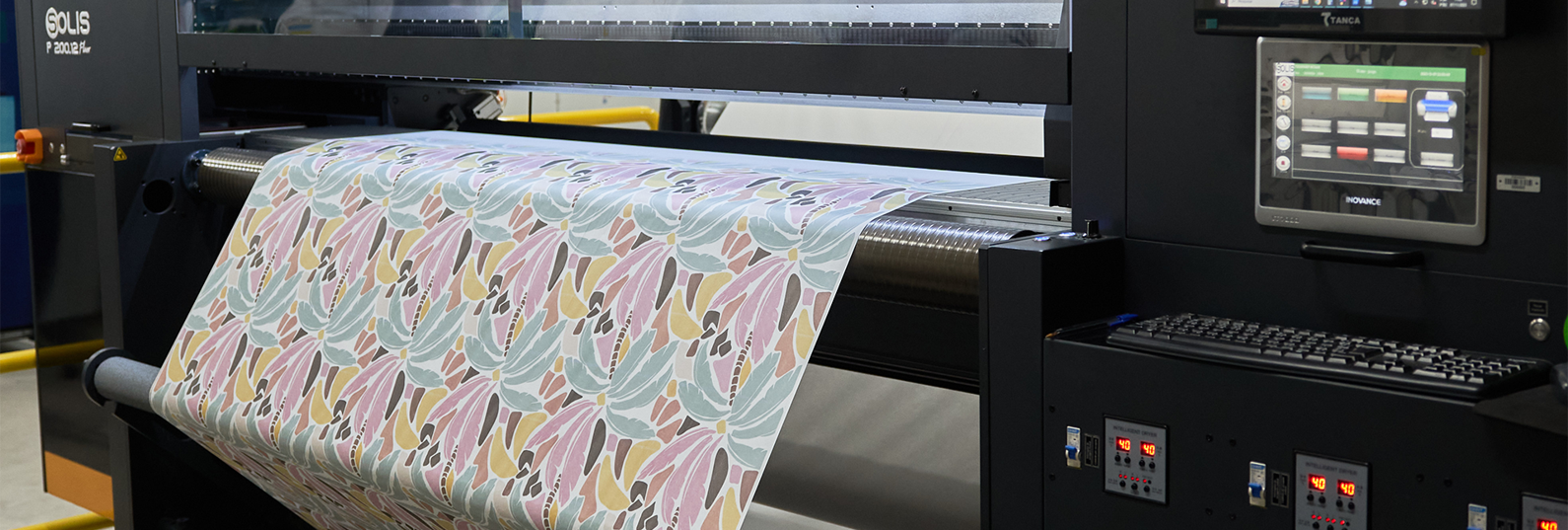
When analyzing a collection strategically, digital printing on fabrics delivers benefits that go beyond aesthetics. It expands creative possibilities, helps optimize assortment planning, and supports decisions that are more aligned with brand positioning and production realities.
Among the most relevant benefits are:
These advantages help brands avoid two common extremes: overproducing without confidence in sell-through potential or creating collections that look too similar to everything already available in the market. When used strategically, the technology expands creative possibilities without compromising commercial intelligence.
Before choosing digital printing on fabrics, it is important to evaluate the role that print will play within the collection. It should reinforce the concept, positioning, and purchase appeal. When artwork is added simply to fill a product, the risk of visual excess increases and the collection loses consistency.
It is equally important to consider the fabric base where the artwork will be applied. Final quality depends not only on the design itself, but also on fabric behavior, hand feel, drape, and intended end use. This approach is reflected in developments for segments such as sportswear, beachwear, lifewear, and underwear.
Some useful questions during the evaluation process include:
There is also an important technical consideration. In continuous digital printing on fabric rolls, designs must be properly repeated with seamless alignment. This detail directly impacts print flow and the overall visual quality of the final result.
Digital printing on fabrics should not be treated as an automatic solution for every collection. Some proposals find their differentiation in texture, solid colors, finishes, or the fabric structure itself. In these situations, forcing a print may confuse the product more than enhance it.
Another common mistake is assuming that visual technology alone can create commercial appeal. A collection still depends on fit, raw materials, finishing, and alignment with the target audience. Printing may increase perceived value, but it cannot replace thoughtful product development.
For this reason, digital printing on fabrics is most effective when brands clearly understand what they want to communicate. If the goal is to create exclusivity, respond quickly to market changes, test artwork with greater flexibility, or build a line with strong visual appeal, the technology becomes a valuable ally. Without that clarity, it becomes merely an effect.
Digital printing on fabrics becomes even more valuable when supported by structure, expertise, and product vision. At Texneo, digital printing is presented as a technology capable of delivering unlimited colors, photographic quality, rich detail, and lower water consumption during the process.
This technology is integrated with the development of fabrics for different segments, making the conversation more strategic for brands building new collections.
It is not merely about applying artwork. It involves considering the fabric base, intended use, performance, and visual result as part of a complete solution.
Ultimately, investing in digital printing on fabrics is worthwhile when a collection demands differentiation, agility, and greater creative freedom while maintaining technical and commercial consistency. This is where Texneo positions itself: offering technology, a wide range of fabric bases, and support to transform ideas into products that create greater value for both brands and collections.
This makes a difference because today a collection is more than a creative exercise. It also needs to make commercial sense, align with launch timing, and connect with consumers who seek novelty without giving up quality. When technology becomes a strategic tool, product decisions become smarter.
Why Has Digital Printing on Fabrics Gained Space in Collections?
The main reason is simple: this technology allows the creation of prints with multiple colors, rich detail, and photographic-quality reproduction, without the traditional limitations related to artwork dimensions. In practice, this significantly expands development possibilities for brands looking to create more distinctive and original collections.
In addition to visual freedom, there is also an operational advantage. Digital printing helps reduce waste and makes smaller production runs more viable, favoring testing, capsule collections, and more targeted launches. For many companies, this completely changes the logic behind collection development.
When Does Digital Printing on Fabrics Make the Most Sense?
Digital printing on fabrics is most valuable when a collection requires true differentiation rather than simply volume. This is particularly relevant for capsule lines, exclusive projects, higher-value proposals, and collections that depend on visual impact to stand out from the very first interaction with consumers.
It also works extremely well when brands want to test new prints without committing to large production quantities. In markets where trends change quickly, having the flexibility to validate visual directions becomes a competitive advantage rather than a minor detail.
Another important aspect is the level of detail. Digital printing on fabrics stands out when a collection requires more complex artwork, color nuances, subtle transitions, and smaller design elements that demand visual precision. In these situations, the technology becomes part of the garment’s value proposition rather than simply an aesthetic resource.
Advantages of Digital Printing on Fabrics in Collection Development
When analyzing a collection strategically, digital printing on fabrics delivers benefits that go beyond aesthetics. It expands creative possibilities, helps optimize assortment planning, and supports decisions that are more aligned with brand positioning and production realities.
Among the most relevant benefits are:
- Freedom to develop more elaborate prints
- Rich colors and detailed artwork
- Possibility of creating more exclusive collections
- Greater flexibility for smaller production runs
- More agility for testing and launching new products
- Reduced waste compared to more traditional processes
- Better alignment between creativity, timing, and commercial strategy
These advantages help brands avoid two common extremes: overproducing without confidence in sell-through potential or creating collections that look too similar to everything already available in the market. When used strategically, the technology expands creative possibilities without compromising commercial intelligence.
How to Evaluate Digital Printing on Fabrics Before Approving a Garment
Before choosing digital printing on fabrics, it is important to evaluate the role that print will play within the collection. It should reinforce the concept, positioning, and purchase appeal. When artwork is added simply to fill a product, the risk of visual excess increases and the collection loses consistency.
It is equally important to consider the fabric base where the artwork will be applied. Final quality depends not only on the design itself, but also on fabric behavior, hand feel, drape, and intended end use. This approach is reflected in developments for segments such as sportswear, beachwear, lifewear, and underwear.
Some useful questions during the evaluation process include:
- Does the print strengthen the collection concept?
- Does the garment truly require this level of visual detail?
- Does the projected volume fit a more flexible production model?
- Is there room for a capsule collection or market validation test?
- Does the selected fabric enhance the artwork?
- Does the print help increase the garment’s perceived value?
There is also an important technical consideration. In continuous digital printing on fabric rolls, designs must be properly repeated with seamless alignment. This detail directly impacts print flow and the overall visual quality of the final result.
The Limits of Digital Printing on Fabrics and What to Consider
Digital printing on fabrics should not be treated as an automatic solution for every collection. Some proposals find their differentiation in texture, solid colors, finishes, or the fabric structure itself. In these situations, forcing a print may confuse the product more than enhance it.
Another common mistake is assuming that visual technology alone can create commercial appeal. A collection still depends on fit, raw materials, finishing, and alignment with the target audience. Printing may increase perceived value, but it cannot replace thoughtful product development.
For this reason, digital printing on fabrics is most effective when brands clearly understand what they want to communicate. If the goal is to create exclusivity, respond quickly to market changes, test artwork with greater flexibility, or build a line with strong visual appeal, the technology becomes a valuable ally. Without that clarity, it becomes merely an effect.
How Texneo Supports Digital Printing Projects
Digital printing on fabrics becomes even more valuable when supported by structure, expertise, and product vision. At Texneo, digital printing is presented as a technology capable of delivering unlimited colors, photographic quality, rich detail, and lower water consumption during the process.
This technology is integrated with the development of fabrics for different segments, making the conversation more strategic for brands building new collections.
It is not merely about applying artwork. It involves considering the fabric base, intended use, performance, and visual result as part of a complete solution.
Ultimately, investing in digital printing on fabrics is worthwhile when a collection demands differentiation, agility, and greater creative freedom while maintaining technical and commercial consistency. This is where Texneo positions itself: offering technology, a wide range of fabric bases, and support to transform ideas into products that create greater value for both brands and collections.
 Go back