Sports Performance: How the Right Fabric Enhances the Performance of Your Sportswear Collection
06 de August de 2026 • Texneo • Sportswear
Discover how technical fabrics enhance sports performance in fitness collections with elasticity, quick-drying performance, and UV50+ Protection.
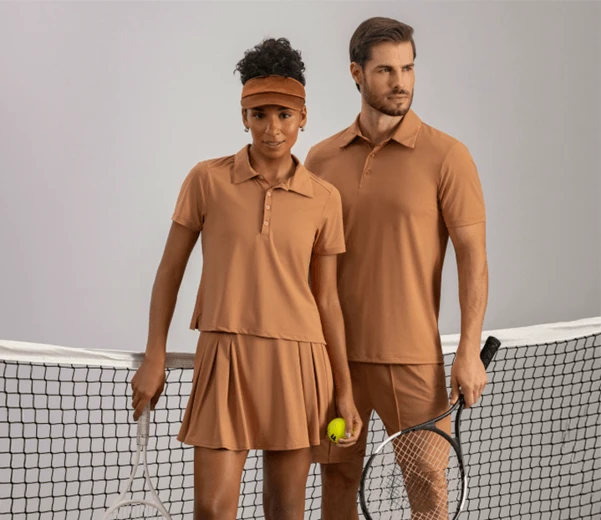
Sports performance in apparel depends on the combination of fabric, technology, pattern design, and the garment’s intended use. The right fabric can improve comfort, mobility, breathability, drying speed, UV protection, and the feeling of confidence during training, helping sportswear and fitness brands create more technical and valued collections.
Creating a sportswear collection is not just about choosing colors, cuts, and trends. In garments designed for movement, sweat, heat, impact, and repetition, the fabric is one of the most strategic decisions in the project.
Consumers who buy sportswear seek aesthetics, but they also expect comfort, freedom of movement, stability, a pleasant hand feel, and practicality. That is why sports performance begins before pattern design. It begins with the choice of the textile foundation.
A gym fabric must perform well with the body in motion. Leggings need to move with stretches. A sports bra must provide support and security. A T-shirt must promote breathability and quick drying. Garments designed for water sports must account for sun exposure, chlorine, saltwater, and elasticity.
Sports performance in apparel is the ability of a garment to support physical activity without restricting movement, causing discomfort, or compromising the user experience. It involves attributes such as elasticity, breathability, compression, coverage, protection, drying performance, and hand feel.
In practice, this means that a sportswear garment must perform effectively under real conditions of use. During exercise, the body generates heat, sweats, moves continuously, and requires the fabric to adapt to different ranges of motion.
A review published in Sports Medicine - Open explains that sports apparel typically combines lightweight, breathable fabrics, surface treatments, and design features to promote sweat evaporation and comfort during exercise in hot environments. The study also highlights that apparel influences thermoregulation, comfort, and overall perception during physical activity.
For this reason, selecting sports fabrics requires a broader analysis than simply considering fiber composition or fabric weight. It is essential to understand the sport, training intensity, season, target audience, sales channel, and brand promise.
Sportswear fabrics play a key role in transforming textile technology into the user experience. When the foundation is properly selected, garments fit better, move with the body, reduce discomfort, and deliver greater perceived value.
When the fabric does not align with the garment’s purpose, issues can arise, such as transparency during bending movements, excessive heat retention, poor recovery, a rough hand feel, moisture buildup, and deformation after use.
For this reason, brands operating in the fitness market must select gym fabrics based on technical criteria. The search for the best fabric for gym wear should not focus solely on elasticity, but also on coverage, breathability, compression, and durability.
Among the most important performance attributes are:
We offer technologies such as Air, High Compression, High Coverage, UV50+, Dry, Antimicrobial, Medium Compression, Soft Touch, and Bielastic, designed to meet the different demands of sportswear, lifewear, beachwear, and underwear.

Not every physical activity requires the same type of technical fabric. Running apparel should prioritize lightness, breathability, and quick drying. Strength training garments, on the other hand, may require greater coverage, compression, and recovery.
In yoga, comfort and freedom of movement are essential. For water sports, sun protection, durability, and wet-state performance become more important.
This table helps illustrate that performance is not a single attribute. The right fabric depends on the role of the garment within the collection.
A breathable fabric helps reduce the feeling of overheating during use. It promotes airflow and contributes to a more comfortable experience during physical activity.
Quick-drying performance is also important because accumulated sweat can cause discomfort, add weight, increase friction, and reduce the perceived quality of a garment. In training apparel, consumers quickly notice when a fabric remains damp for an extended period of time.
A study published in the Textile Research Journal on moisture management in activewear highlights the importance of dynamic testing that simulates physical activity, perspiration, and wind to better evaluate the real-world performance of fabrics. The research reinforces that conditions close to actual use are essential for analyzing both performance and on-body comfort.
Our Dry technology facilitates sweat evaporation by moving moisture away from the fabric and helping maintain body temperature regulation in warm climates. It also contributes to faster drying, enhanced performance, and a soft hand feel.
Compression fabrics are recommended when a garment needs to provide support, firmness, and a sense of stability. They are commonly used in leggings, shorts, sports bras, training shorts, and other garments designed for high-performance activities.
Compression can help reduce muscle vibration and fatigue during intense workouts. Texneo also offers fabrics with Medium Compression as an option for garments that provide support with a gentle level of compression, without restricting movement.
Elastane is an essential component of sports fabrics, allowing garments to move naturally with the body. It contributes to stretch, fit, and recovery, especially during movements that require a wide range of motion.
Sports fabrics containing elastane should also be evaluated in combination with coverage and fabric construction. A highly elastic foundation with low coverage may result in transparency, while a very firm foundation with limited recovery may compromise comfort.
For this reason, the ideal choice for fitness apparel typically balances:
Our technologies help transform technical attributes into meaningful product differentiators. Rather than simply communicating that a garment is made with a sports-performance fabric, brands can highlight the benefits that consumers directly perceive.
Among the technologies most closely associated with sports performance are:
These technologies should be selected according to the activity, the collection’s purpose, and the desired level of performance.
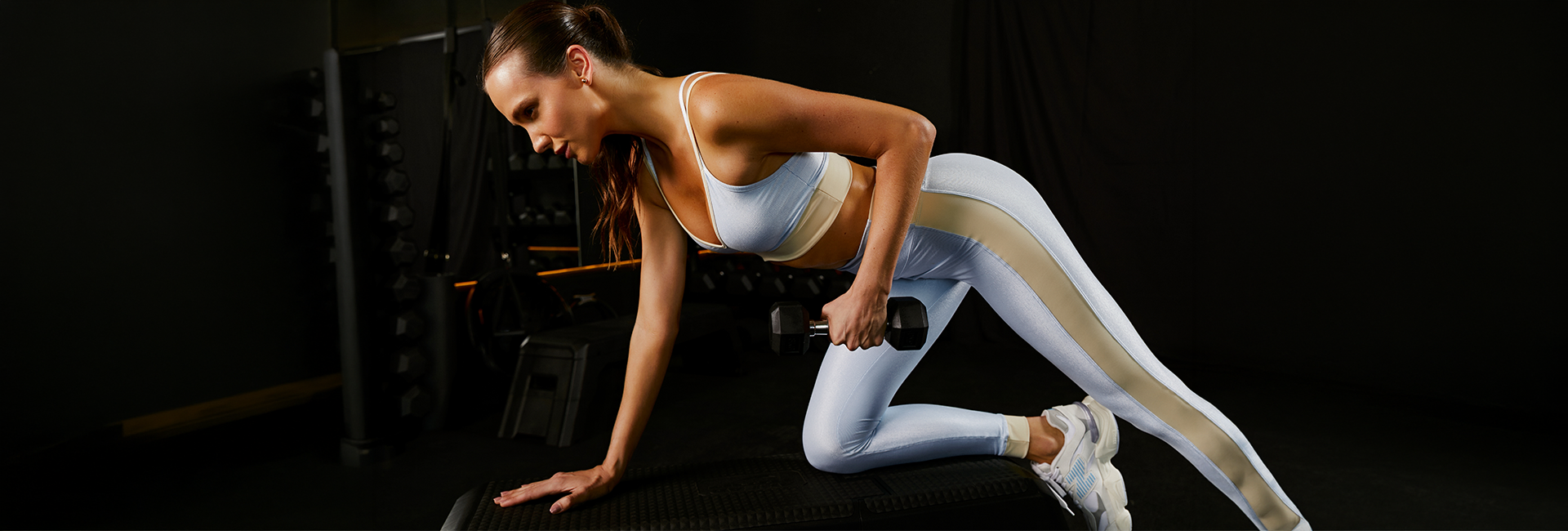
Choosing the right fabric foundation depends on the garment being developed. For T-shirts, tanks, and other upper-body garments, a lightweight, quick-drying fabric may be the most suitable option. For leggings and sports bras, coverage, elastane content, and recovery become increasingly important.
The Dry Sport fabric is a 100% polyester knit with an interlock structure. It combines comfort and practicality, providing a pleasant feel when worn, quick-drying performance, and UV50+ Protection for sun exposure. With a weight of 130 g/m², it is versatile for both sports and casual applications.
The Hyper Soft fabric is composed of 84% polyamide and 16% elastane. It can be described as a softer, more comfortable version of Hyper, featuring super-filament polyamide yarn, high coverage, balanced compression, a silky hand feel, premium stretch, excellent recovery, and confidence against transparency.
The Fitty fabric combines 72% polyamide and 28% elastane. This knit offers exceptional stretch, high coverage, body-conforming fit, thermal comfort, a soft hand feel, and freedom of movement, making it a versatile choice for both women's and men's garments.
These fabric foundations can play different roles within a collection. The key is to align each fabric with the garment’s intended use and the brand’s promise.
To select sports fabrics with greater confidence, the first step is to define the role of each garment within the collection. Will it be used for high-intensity training? Casual looks? Outdoor activities? Low-impact exercise?
Once that purpose is clear, it must be translated into technical criteria. A high-performance collection should have a clear hierarchy of attributes.
Use this checklist before approving a fabric foundation:
This level of attention helps prevent fabric selection from being based solely on appearance or cost. In sportswear, the fabric foundation is an essential part of both the user experience and the product’s commercial value proposition.

Although the terms are closely related, they do not mean exactly the same thing. Sportswear is typically associated with athletic apparel designed for performance, training, and physical activity. Activewear, on the other hand, can encompass hybrid garments that are worn both for exercise and in casual settings.
In practice, many brands operate in both spaces simultaneously. A pair of leggings may be worn at the gym, during a Pilates class, or as part of an everyday outfit. A lightweight jacket can be useful both during warm-ups and while commuting.
This is where technical fabrics become especially relevant. They allow products to combine performance, comfort, and versatility in a single garment.
Textile technology only creates value when consumers understand its benefits. That is why, in addition to selecting the right fabric foundation, brands need to clearly communicate what each fabric delivers.
Rather than simply saying a product is made with a "technical fabric," it is worth explaining the specific benefits:
These benefits support sales teams, e-commerce platforms, catalogs, and point-of-sale
In sportswear, performance must be considered from the collection development stage, not only in the finished product.
The best-performing fabrics depend on the activity. For high-intensity training, fabrics with elastane, compression, high coverage, and excellent recovery often perform well. For T-shirts and tank tops, breathable, lightweight, and quick-drying fabrics may be more suitable.
Fabric foundations such as Dry Sport, Hyper Soft, and Fitty can be evaluated according to the garment type, design, and objectives of the collection.
Sportswear is more closely associated with athletic performance and physical activity. Activewear is a broader category that includes garments worn both for training and everyday use.
Today, many collections combine both concepts, creating products that are technical, comfortable, and visually versatile.
The best fabric for gym apparel depends on the garment. For leggings, sports bras, and shorts, it is important to consider elastane content, coverage, recovery, and compression. For T-shirts, tank tops, and upper-body garments, breathability and quick-drying performance are often the main priorities.
The ideal choice is always the one that aligns with the activity, garment design, and intended use.
Yes, when the technology is aligned with the garment’s purpose. Technologies such as Dry, Air, Antimicrobial, UV50+, High Coverage, and Compression help transform comfort and performance into benefits that consumers can perceive and value.
The key is choosing the right technology for the right product.
Sports performance does not depend solely on the athlete or the garment design. It is also directly linked to the fabric chosen for the garment.
In a sportswear collection, the fabric foundation must support movement, perspiration, temperature regulation, elasticity, compression, coverage, and durability. When these factors are effectively combined, brands can deliver products that are more technical, comfortable, and competitive.
We develop performance fabrics and textile technologies for brands looking to strengthen their presence in fitness fashion, sportswear, lifewear, and beachwear. With fabric foundations such as Dry Sport, Hyper Soft, and Fitty, it is possible to create products with different levels of performance, hand feel, elasticity, and comfort. Contact the Texneo team to learn more.
Want to position your brand in the high-performance segment? Discover Texneo’s technical fabric foundations designed to enhance real sports performance. Contact our sales team.
Creating a sportswear collection is not just about choosing colors, cuts, and trends. In garments designed for movement, sweat, heat, impact, and repetition, the fabric is one of the most strategic decisions in the project.
Consumers who buy sportswear seek aesthetics, but they also expect comfort, freedom of movement, stability, a pleasant hand feel, and practicality. That is why sports performance begins before pattern design. It begins with the choice of the textile foundation.
A gym fabric must perform well with the body in motion. Leggings need to move with stretches. A sports bra must provide support and security. A T-shirt must promote breathability and quick drying. Garments designed for water sports must account for sun exposure, chlorine, saltwater, and elasticity.
What Is Sports Performance in Apparel?
Sports performance in apparel is the ability of a garment to support physical activity without restricting movement, causing discomfort, or compromising the user experience. It involves attributes such as elasticity, breathability, compression, coverage, protection, drying performance, and hand feel.
In practice, this means that a sportswear garment must perform effectively under real conditions of use. During exercise, the body generates heat, sweats, moves continuously, and requires the fabric to adapt to different ranges of motion.
A review published in Sports Medicine - Open explains that sports apparel typically combines lightweight, breathable fabrics, surface treatments, and design features to promote sweat evaporation and comfort during exercise in hot environments. The study also highlights that apparel influences thermoregulation, comfort, and overall perception during physical activity.
For this reason, selecting sports fabrics requires a broader analysis than simply considering fiber composition or fabric weight. It is essential to understand the sport, training intensity, season, target audience, sales channel, and brand promise.
Sports Performance and Sportswear Fabrics: Why the Foundation Matters
Sportswear fabrics play a key role in transforming textile technology into the user experience. When the foundation is properly selected, garments fit better, move with the body, reduce discomfort, and deliver greater perceived value.
When the fabric does not align with the garment’s purpose, issues can arise, such as transparency during bending movements, excessive heat retention, poor recovery, a rough hand feel, moisture buildup, and deformation after use.
For this reason, brands operating in the fitness market must select gym fabrics based on technical criteria. The search for the best fabric for gym wear should not focus solely on elasticity, but also on coverage, breathability, compression, and durability.
Among the most important performance attributes are:
- Elasticity: allows a full range of motion;
- Compression: provides support and a feeling of firmness;
- Quick drying: helps reduce the sensation of moisture;
- Breathability: promotes heat exchange and thermal comfort;
- UV50+ Protection: adds safety for outdoor activities;
- Soft hand feel: enhances comfort against the skin;
- High coverage: reduces the risk of transparency;
- Recovery: helps the garment return to its original shape.
We offer technologies such as Air, High Compression, High Coverage, UV50+, Dry, Antimicrobial, Medium Compression, Soft Touch, and Bielastic, designed to meet the different demands of sportswear, lifewear, beachwear, and underwear.
Sports Performance Across Different Activities
Not every physical activity requires the same type of technical fabric. Running apparel should prioritize lightness, breathability, and quick drying. Strength training garments, on the other hand, may require greater coverage, compression, and recovery.
In yoga, comfort and freedom of movement are essential. For water sports, sun protection, durability, and wet-state performance become more important.
| Activity | Key Garment Requirements | Recommended Fabric Type |
|---|---|---|
| Strength Training | Coverage, compression, elasticity, recovery, and confidence during squats and bending movements | Sports fabrics with elastane, high coverage, and medium or high compression |
| Running | Lightweight feel, breathability, quick drying, and thermal comfort | Breathable fabric, lightweight foundation, Dry technology, and UV50+ Protection for outdoor use |
| Yoga and Pilates | Soft hand feel, mobility, elasticity, and low transparency | Fabric with elastane, Soft Touch, Bielastic properties, and good recovery |
| Water Sports | Sun protection, elasticity, durability, and comfort when wet | Fabrics with UV50+ Protection, durable elastane, and quick-drying performance |
This table helps illustrate that performance is not a single attribute. The right fabric depends on the role of the garment within the collection.
Breathable Fabric, Quick Drying, and Moisture Management
A breathable fabric helps reduce the feeling of overheating during use. It promotes airflow and contributes to a more comfortable experience during physical activity.
Quick-drying performance is also important because accumulated sweat can cause discomfort, add weight, increase friction, and reduce the perceived quality of a garment. In training apparel, consumers quickly notice when a fabric remains damp for an extended period of time.
A study published in the Textile Research Journal on moisture management in activewear highlights the importance of dynamic testing that simulates physical activity, perspiration, and wind to better evaluate the real-world performance of fabrics. The research reinforces that conditions close to actual use are essential for analyzing both performance and on-body comfort.
Our Dry technology facilitates sweat evaporation by moving moisture away from the fabric and helping maintain body temperature regulation in warm climates. It also contributes to faster drying, enhanced performance, and a soft hand feel.
Compression Fabrics and Elastane: When to Use Them?
Compression fabrics are recommended when a garment needs to provide support, firmness, and a sense of stability. They are commonly used in leggings, shorts, sports bras, training shorts, and other garments designed for high-performance activities.
Compression can help reduce muscle vibration and fatigue during intense workouts. Texneo also offers fabrics with Medium Compression as an option for garments that provide support with a gentle level of compression, without restricting movement.
Elastane is an essential component of sports fabrics, allowing garments to move naturally with the body. It contributes to stretch, fit, and recovery, especially during movements that require a wide range of motion.
Sports fabrics containing elastane should also be evaluated in combination with coverage and fabric construction. A highly elastic foundation with low coverage may result in transparency, while a very firm foundation with limited recovery may compromise comfort.
For this reason, the ideal choice for fitness apparel typically balances:
- Elasticity;
- Compression;
- Coverage;
- Recovery;
- Hand feel;
- Breathability;
- Dimensional stability;
- Performance while worn and in motion.
Sports Performance with Texneo Technologies
Our technologies help transform technical attributes into meaningful product differentiators. Rather than simply communicating that a garment is made with a sports-performance fabric, brands can highlight the benefits that consumers directly perceive.
Among the technologies most closely associated with sports performance are:
- Air: enables the development of highly breathable fabrics, promoting airflow and sweat evaporation to support body temperature regulation and comfort.
- Dry: facilitates sweat evaporation and moves moisture away from the fabric, helping enhance thermal regulation, drying performance, and a feeling of freshness.
- UV50+: provides sun protection by blocking up to 98% of UVA and UVB rays.
- High Compression: contributes to a feeling of firmness and support during intense workouts.
- Medium Compression: delivers support and comfort without restricting movement.
- High Coverage: helps prevent transparency during movements that require stretch and flexibility.
- Antimicrobial: helps combat microorganisms responsible for perspiration-related odors.
- Bielastic: provides multi-directional stretch, supporting mobility and freedom of movement.
These technologies should be selected according to the activity, the collection’s purpose, and the desired level of performance.
Dry Sport, Hyper Soft, and Fitty: Texneo Foundations for Performance Collections
Choosing the right fabric foundation depends on the garment being developed. For T-shirts, tanks, and other upper-body garments, a lightweight, quick-drying fabric may be the most suitable option. For leggings and sports bras, coverage, elastane content, and recovery become increasingly important.
The Dry Sport fabric is a 100% polyester knit with an interlock structure. It combines comfort and practicality, providing a pleasant feel when worn, quick-drying performance, and UV50+ Protection for sun exposure. With a weight of 130 g/m², it is versatile for both sports and casual applications.
The Hyper Soft fabric is composed of 84% polyamide and 16% elastane. It can be described as a softer, more comfortable version of Hyper, featuring super-filament polyamide yarn, high coverage, balanced compression, a silky hand feel, premium stretch, excellent recovery, and confidence against transparency.
The Fitty fabric combines 72% polyamide and 28% elastane. This knit offers exceptional stretch, high coverage, body-conforming fit, thermal comfort, a soft hand feel, and freedom of movement, making it a versatile choice for both women's and men's garments.
These fabric foundations can play different roles within a collection. The key is to align each fabric with the garment’s intended use and the brand’s promise.
How to Choose Sports Fabrics for a Sportswear Collection
To select sports fabrics with greater confidence, the first step is to define the role of each garment within the collection. Will it be used for high-intensity training? Casual looks? Outdoor activities? Low-impact exercise?
Once that purpose is clear, it must be translated into technical criteria. A high-performance collection should have a clear hierarchy of attributes.
Use this checklist before approving a fabric foundation:
- Does the garment require high, medium, or light compression?
- Does the fabric provide sufficient coverage for a full range of movement?
- Does the knit offer adequate breathability?
- Is quick-drying performance necessary for the intended use?
- Will the garment be worn outdoors and require UV50+ Protection?
- Is the hand feel suitable for prolonged contact with the skin?
- Does the fabric’s recovery match its elastane content?
- Does the foundation work well with the planned garment design?
- Is the fabric weight appropriate for the target segment?
- Is the added technology easy to communicate to consumers?
This level of attention helps prevent fabric selection from being based solely on appearance or cost. In sportswear, the fabric foundation is an essential part of both the user experience and the product’s commercial value proposition.
Sports Performance, Activewear, and Sportswear: Is There a Difference?
Although the terms are closely related, they do not mean exactly the same thing. Sportswear is typically associated with athletic apparel designed for performance, training, and physical activity. Activewear, on the other hand, can encompass hybrid garments that are worn both for exercise and in casual settings.
In practice, many brands operate in both spaces simultaneously. A pair of leggings may be worn at the gym, during a Pilates class, or as part of an everyday outfit. A lightweight jacket can be useful both during warm-ups and while commuting.
This is where technical fabrics become especially relevant. They allow products to combine performance, comfort, and versatility in a single garment.
How to Turn Textile Technology into Perceived Value
Textile technology only creates value when consumers understand its benefits. That is why, in addition to selecting the right fabric foundation, brands need to clearly communicate what each fabric delivers.
Rather than simply saying a product is made with a "technical fabric," it is worth explaining the specific benefits:
- Quick-drying performance;
- Helps reduce the feeling of moisture;
- Provides UV50+ Protection;
- Offers a soft hand feel;
- Moves naturally with the body;
- Reduces the risk of transparency;
- Delivers balanced compression;
- Promotes thermal comfort;
- Helps reduce perspiration-related odors.
These benefits support sales teams, e-commerce platforms, catalogs, and point-of-sale
FAQ About Sports Performance in Apparel
What Is Sports Performance in Apparel?
Sports performance in apparel is the ability of a garment to support physical activity with comfort, mobility, breathability, drying performance, support, and confidence. It depends on the combination of fabric, technology, garment construction, and proper application.In sportswear, performance must be considered from the collection development stage, not only in the finished product.
Which Fabrics Deliver the Best Performance for Fitness Apparel?
The best-performing fabrics depend on the activity. For high-intensity training, fabrics with elastane, compression, high coverage, and excellent recovery often perform well. For T-shirts and tank tops, breathable, lightweight, and quick-drying fabrics may be more suitable.Fabric foundations such as Dry Sport, Hyper Soft, and Fitty can be evaluated according to the garment type, design, and objectives of the collection.
What Is the Difference Between Activewear and Sportswear?
Sportswear is more closely associated with athletic performance and physical activity. Activewear is a broader category that includes garments worn both for training and everyday use.Today, many collections combine both concepts, creating products that are technical, comfortable, and visually versatile.
What Is the Best Fabric for the Gym?
The best fabric for gym apparel depends on the garment. For leggings, sports bras, and shorts, it is important to consider elastane content, coverage, recovery, and compression. For T-shirts, tank tops, and upper-body garments, breathability and quick-drying performance are often the main priorities.The ideal choice is always the one that aligns with the activity, garment design, and intended use.
Do Smart Fabrics Really Make a Difference?
Yes, when the technology is aligned with the garment’s purpose. Technologies such as Dry, Air, Antimicrobial, UV50+, High Coverage, and Compression help transform comfort and performance into benefits that consumers can perceive and value.The key is choosing the right technology for the right product.
Performance Begins with Fabric Selection
Sports performance does not depend solely on the athlete or the garment design. It is also directly linked to the fabric chosen for the garment.
In a sportswear collection, the fabric foundation must support movement, perspiration, temperature regulation, elasticity, compression, coverage, and durability. When these factors are effectively combined, brands can deliver products that are more technical, comfortable, and competitive.
We develop performance fabrics and textile technologies for brands looking to strengthen their presence in fitness fashion, sportswear, lifewear, and beachwear. With fabric foundations such as Dry Sport, Hyper Soft, and Fitty, it is possible to create products with different levels of performance, hand feel, elasticity, and comfort. Contact the Texneo team to learn more.
Want to position your brand in the high-performance segment? Discover Texneo’s technical fabric foundations designed to enhance real sports performance. Contact our sales team.
 Go back