Textile industry: industry overview, trends, and what to expect from the Brazilian market in the coming years
21 de September de 2026 • Texneo • Gestão
Understand the overview of the Brazilian textile industry, the main industry trends, and the role of technology and sustainability in the future of fashion.
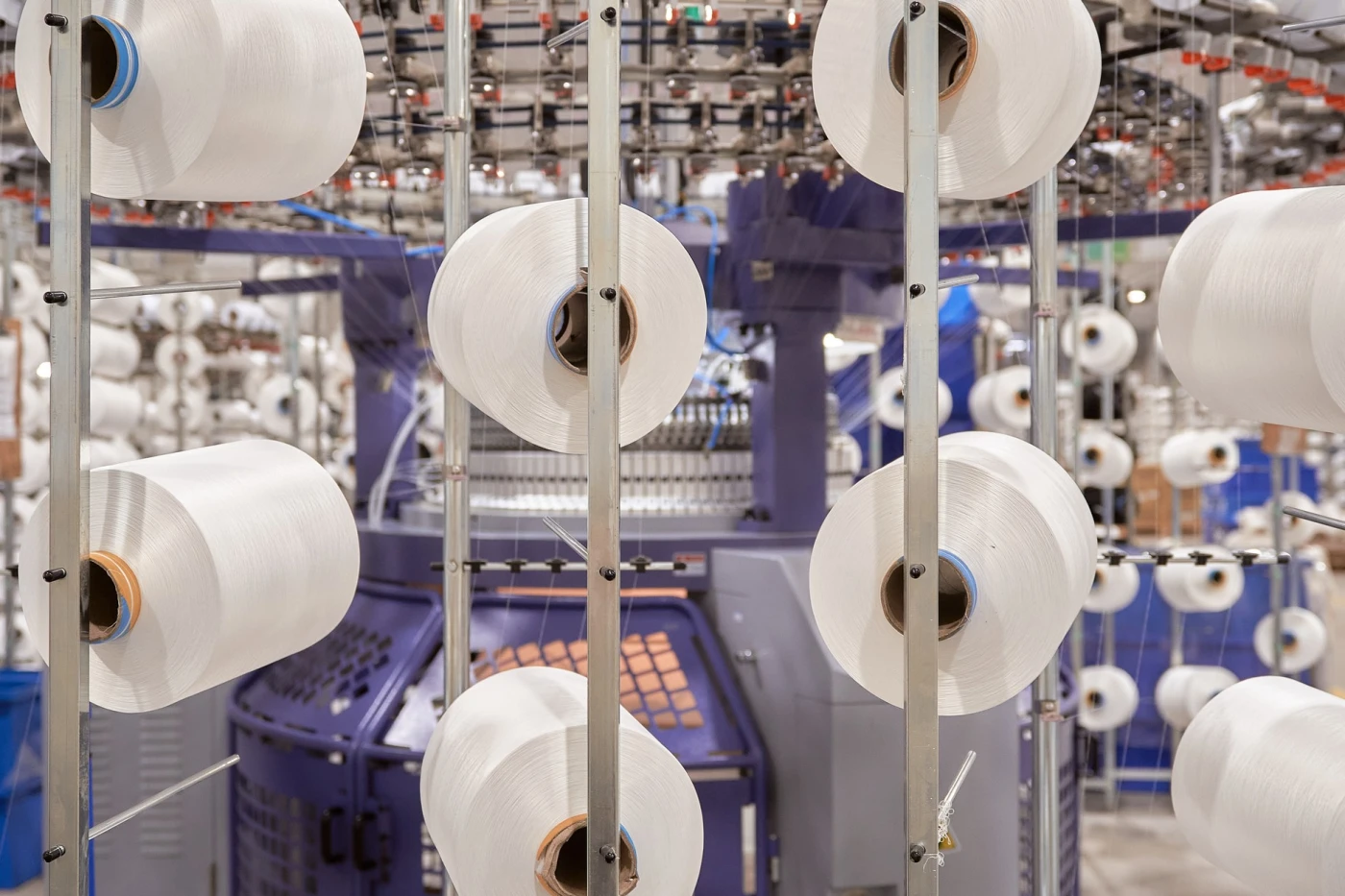
The Brazilian textile industry remains strategic, but it is going through a transformation cycle. Data updated by Abit in 2026 show a robust production chain with significant relevance in employment, production, exports, and domestic consumption.
At the same time, the industry faces pressure from imports, the need for modernization, the advancement of Industry 4.0, and increasing demands for sustainability, traceability, and innovation.
Talking about the textile industry means talking about one of the most complete and important value chains in the Brazilian economy. The industry encompasses fibers, yarns, fabrics, woven fabrics, dyeing, garment manufacturing, retail, fashion, technology, design, and consumption.
In the coming years, brands and manufacturers that successfully combine product development, innovation, efficiency, and environmental responsibility will be better positioned to compete. After all, the market no longer seeks only volume. It seeks differentiation, performance, traceability, and perceived value.
For those developing collections, understanding this landscape is essential. The choice of fabric, supplier, technology, and product positioning directly influences cost, quality, consumer experience, and competitiveness.
The Brazilian textile industry has strong economic and productive relevance. According to Abit's Industry Profile, updated in 2026, the textile and apparel chain includes 25,700 formal production units and employs 1.34 million formal workers, reaching 8 million when indirect jobs and income effects are considered.
The same source indicates that Brazil is among the four largest knit fabric producers in the world, with 475,800 tons produced in 2024. It also stands out as a complete value chain, spanning fiber production, spinning, weaving, dyeing, garment manufacturing, and retail.
These figures demonstrate that the industry goes far beyond apparel production. It drives technology, logistics, the chemical industry, design, research, fashion, retail, and specialized services.
Another differentiator is the national production structure. The proximity between industry, manufacturers, brands, and consumers allows solutions to be developed faster, with greater control and adaptability to Brazilian market demands.
In practice, this means using data, sensors, automation, connected systems, and integrated management to produce more efficiently. In the textile industry, this evolution can be seen in machine monitoring, real-time production tracking, waste reduction, failure prediction, and more accurate material planning.
With Industry 4.0, the industry uses data, automation, process integration, and predictability to reduce waste and improve decision-making.
Benefits include:
Textile technology is also present in the fabrics themselves. Fabrics with UV Protection, quick-drying properties, breathability, stretch, thermal comfort, and good coverage help brands create more technical products aligned with real-world use.
Textile sustainability is no longer just an institutional topic. It now influences development, purchasing, and communication decisions. Brands and consumers are paying closer attention to material origins, process impacts, garment durability, and supply chain transparency.
According to an Abit survey, the ESG agenda is a cross-cutting priority: 53% of companies plan to invest in energy efficiency, 53% in recycled or sustainable materials, 46% in waste management, and 33% in the circular economy.
These figures reinforce that sustainability is not separate from competitiveness. On the contrary, sustainable production processes can help reduce waste.
Among the sustainability initiatives gaining traction are:
Sustainable fashion also depends on technical decisions. A more responsible garment begins with fabric selection, continues through collection development, and extends to how it is communicated to consumers.
ESG in the textile industry encompasses environmental, social, and governance factors. In practice, it means evaluating how the value chain produces, purchases, sells, communicates, and measures impact.
We offer a dedicated sustainable fabric line. Texneo Green identifies lower-impact fabrics made with recycled or renewable raw materials, more efficient dyeing and finishing technologies, and quality, comfort, and durability standards.
The initiative also includes alternatives such as R-Green, developed with recycled polyamide, and fabrics made from recycled polyester sourced from PET bottles.
This type of initiative demonstrates how sustainability and performance can work together in the development of collections aligned with the future of the industry.
Fashion trends are no longer reflected only in colors, prints, and silhouettes. They are also evident in the way people buy, use, and evaluate garments.
Consumers are looking for comfort, versatility, durability, aesthetics, and purpose. This is changing how brands approach fabric selection and collection development.
Among the trends shaping the market:
Brazilian textile production is expected to remain under pressure from both internal and external factors. On one hand, the country has productive capacity, technical expertise, and a significant consumer market. On the other, it faces intense competition from imported products, particularly in lower-price segments.
According to Abit, any growth in production in 2026 is expected to depend on factors such as the gradual recovery of credit, a slow decline in interest rates, and a more controlled inflationary environment. However, the association also highlights structural challenges, including the cost of capital and increasing international competition.
In another survey conducted by the association, the main challenges identified by companies were a high tax burden (58%), international competition (58%), a shortage of skilled labor (51%), and economic instability (44%).
Imports can expand product availability for consumers, but they also challenge the competitiveness of the domestic industry. For this reason, Brazilian brands need to develop differentiators that cannot be easily replicated through price alone.
Quality, agility, proximity, design, sustainability, innovation, and technical support are becoming key competitive factors.
For apparel manufacturers and brands, this means revisiting important questions:
The future of the textile industry will not be defined solely by those who produce at the lowest cost, but by those who can deliver value efficiently.
For sportswear brands, for example, this can mean garments that move more naturally with the body. For beachwear, it can provide greater security, fit, and durability. For underwear, it can be synonymous with a soft touch and lasting comfort.
We operate in this context by developing high-performance fabrics with textile technology and sustainability for sportswear, lifewear, beachwear, and underwear. We combine innovation in knitting and Digital printing for different usage occasions.
This positioning helps brands create products that are better prepared for a demanding consumer who compares price, style, comfort, and responsibility.
INK Technology is an example of how innovation and sustainability can come together in a product. These fabrics use solution-dyed yarns, reducing the steps required in conventional dyeing processes, as well as water and energy consumption, CO₂ emissions, and chemical use.
In addition to reducing environmental impact, the technology also contributes to color intensity, Fastness, and durability. This is particularly important for garments that need to maintain their appearance throughout their lifecycle.
This type of solution demonstrates that sustainable production processes should not be viewed as a barrier. Instead, they can become a competitive advantage when they deliver performance, quality, and a strong commercial value proposition.
For brands, the opportunity lies in communicating these benefits clearly. It is not enough to say that a garment is sustainable. It is essential to explain what makes that choice better.
The textile industry is expected to remain in a state of transformation, balancing growth opportunities with competitive pressure and the need for modernization. The market environment is likely to favor companies that invest in technology, more efficient processes, sustainability, and product development with a clear identity.
In the domestic market, an Abit survey for 2026 shows that 35% of companies project modest growth between 0.1% and 2%, while 22% expect stability and 17% forecast moderate expansion between 2.1% and 4%. Regarding exports, 44% anticipate stability and 28% expect a slight increase.
These figures indicate a market that is far from stagnant but requires increasingly strategic decision-making. Going forward, growth will depend less on volume alone and more on productivity, innovation, differentiation, and a strong understanding of consumer needs.
In the coming years, successful companies will be those that:
The textile industry is entering a phase in which competitiveness depends on a broader vision. Producing is no longer enough. Companies must develop better products, communicate more effectively, and deliver solutions that make sense for both consumers and the market.
Technology, sustainability, quality, and performance will become increasingly important criteria. Brands that understand this are more likely to build stronger collections with greater perceived value.
Here, the advancement of the textile industry is driven by the development of technical fabrics for sportswear, lifewear, beachwear, and underwear, combining innovation, comfort, environmental responsibility, and a future-focused vision.
Want to develop collections that are more aligned with Brazilian market trends? Contact Texneo and discover high-performance fabric solutions that transform technology, sustainability, and design into products.
Discover Texneo's fabrics and technologies and bring more value to your next collection.
At the same time, the industry faces pressure from imports, the need for modernization, the advancement of Industry 4.0, and increasing demands for sustainability, traceability, and innovation.
Talking about the textile industry means talking about one of the most complete and important value chains in the Brazilian economy. The industry encompasses fibers, yarns, fabrics, woven fabrics, dyeing, garment manufacturing, retail, fashion, technology, design, and consumption.
In the coming years, brands and manufacturers that successfully combine product development, innovation, efficiency, and environmental responsibility will be better positioned to compete. After all, the market no longer seeks only volume. It seeks differentiation, performance, traceability, and perceived value.
For those developing collections, understanding this landscape is essential. The choice of fabric, supplier, technology, and product positioning directly influences cost, quality, consumer experience, and competitiveness.
Brazilian textile industry: why does it remain strategic?
The Brazilian textile industry has strong economic and productive relevance. According to Abit's Industry Profile, updated in 2026, the textile and apparel chain includes 25,700 formal production units and employs 1.34 million formal workers, reaching 8 million when indirect jobs and income effects are considered. The same source indicates that Brazil is among the four largest knit fabric producers in the world, with 475,800 tons produced in 2024. It also stands out as a complete value chain, spanning fiber production, spinning, weaving, dyeing, garment manufacturing, and retail.
These figures demonstrate that the industry goes far beyond apparel production. It drives technology, logistics, the chemical industry, design, research, fashion, retail, and specialized services.
Another differentiator is the national production structure. The proximity between industry, manufacturers, brands, and consumers allows solutions to be developed faster, with greater control and adaptability to Brazilian market demands.
Textile technology and Industry 4.0: paths to greater competitiveness
When we talk about Industry 4.0, we are referring to the integration of digital technologies into industrial processes. According to the Industry Portal of the National Confederation of Industry (CNI), this concept involves industrial automation and the integration of technologies such as artificial intelligence, robotics, the Internet of Things, and cloud computing to digitize industrial activities, improve processes, and increase productivity.In practice, this means using data, sensors, automation, connected systems, and integrated management to produce more efficiently. In the textile industry, this evolution can be seen in machine monitoring, real-time production tracking, waste reduction, failure prediction, and more accurate material planning.
With Industry 4.0, the industry uses data, automation, process integration, and predictability to reduce waste and improve decision-making.
Benefits include:
- Greater control over production processes;
- Reduced failures and rework;
- More accurate planning;
- Faster product development;
- Smarter use of raw materials;
- Traceability throughout the value chain;
- Better balance between cost, quality, and lead time.
Textile technology is also present in the fabrics themselves. Fabrics with UV Protection, quick-drying properties, breathability, stretch, thermal comfort, and good coverage help brands create more technical products aligned with real-world use.
Textile sustainability: from discourse to selection criteria
Textile sustainability is no longer just an institutional topic. It now influences development, purchasing, and communication decisions. Brands and consumers are paying closer attention to material origins, process impacts, garment durability, and supply chain transparency. According to an Abit survey, the ESG agenda is a cross-cutting priority: 53% of companies plan to invest in energy efficiency, 53% in recycled or sustainable materials, 46% in waste management, and 33% in the circular economy.
These figures reinforce that sustainability is not separate from competitiveness. On the contrary, sustainable production processes can help reduce waste.
Among the sustainability initiatives gaining traction are:
- Use of recycled or renewable fibers;
- Development of longer-lasting products;
- Reduction of water and energy consumption in industrial processes;
- Reuse of production waste;
- Investments in traceability;
- Certifications and technical validation;
- Improved supplier management;
- Sustainable production processes with lower environmental impact.
Sustainable fashion also depends on technical decisions. A more responsible garment begins with fabric selection, continues through collection development, and extends to how it is communicated to consumers.
ESG in the textile industry: why does it matter for brands and manufacturers?
ESG in the textile industry encompasses environmental, social, and governance factors. In practice, it means evaluating how the value chain produces, purchases, sells, communicates, and measures impact. We offer a dedicated sustainable fabric line. Texneo Green identifies lower-impact fabrics made with recycled or renewable raw materials, more efficient dyeing and finishing technologies, and quality, comfort, and durability standards.
The initiative also includes alternatives such as R-Green, developed with recycled polyamide, and fabrics made from recycled polyester sourced from PET bottles.
This type of initiative demonstrates how sustainability and performance can work together in the development of collections aligned with the future of the industry.
Fashion and consumer trends: what should guide future collections?
Fashion trends are no longer reflected only in colors, prints, and silhouettes. They are also evident in the way people buy, use, and evaluate garments. Consumers are looking for comfort, versatility, durability, aesthetics, and purpose. This is changing how brands approach fabric selection and collection development.
Among the trends shaping the market:
- Everyday performance: sports-inspired garments worn beyond training.
- Athleisure and lifewear: comfortable, versatile apparel with improved fit.
- Fitness fashion with technology: fabrics featuring technologies such as compression, adaptive stretch, and technical comfort.
- Functional beachwear: fabrics combining aesthetics, durability, and wearing comfort.
- Enhanced-comfort underwear: softness, breathability, and elasticity as key differentiators.
- Sustainable fashion: lower-impact products and more transparent communication.
- Technical fabrics: materials that deliver noticeable performance benefits.
- Closer supply chains: greater appreciation of domestic suppliers and collaborative product development.
Textile production and imports: challenges for the coming years
Brazilian textile production is expected to remain under pressure from both internal and external factors. On one hand, the country has productive capacity, technical expertise, and a significant consumer market. On the other, it faces intense competition from imported products, particularly in lower-price segments.According to Abit, any growth in production in 2026 is expected to depend on factors such as the gradual recovery of credit, a slow decline in interest rates, and a more controlled inflationary environment. However, the association also highlights structural challenges, including the cost of capital and increasing international competition.
In another survey conducted by the association, the main challenges identified by companies were a high tax burden (58%), international competition (58%), a shortage of skilled labor (51%), and economic instability (44%).
Imports can expand product availability for consumers, but they also challenge the competitiveness of the domestic industry. For this reason, Brazilian brands need to develop differentiators that cannot be easily replicated through price alone.
Quality, agility, proximity, design, sustainability, innovation, and technical support are becoming key competitive factors.
For apparel manufacturers and brands, this means revisiting important questions:
- Does the supplier deliver consistency?
- Does the fabric provide the required performance for its intended use?
- Does the product support the brand positioning?
- Is there traceability or a technical differentiator?
- Does the fabric platform reduce production issues?
- Does the material enhance the consumer experience?
The future of the textile industry will not be defined solely by those who produce at the lowest cost, but by those who can deliver value efficiently.
The role of technical fabrics in the future of collections
Technical fabrics are becoming increasingly important because they address real consumer needs. Rather than offering appearance alone, they deliver benefits such as comfort, stretch, quick-drying properties, protection, breathability, and durability.For sportswear brands, for example, this can mean garments that move more naturally with the body. For beachwear, it can provide greater security, fit, and durability. For underwear, it can be synonymous with a soft touch and lasting comfort.
We operate in this context by developing high-performance fabrics with textile technology and sustainability for sportswear, lifewear, beachwear, and underwear. We combine innovation in knitting and Digital printing for different usage occasions.
This positioning helps brands create products that are better prepared for a demanding consumer who compares price, style, comfort, and responsibility.
INK Technology and more efficient processes
INK Technology is an example of how innovation and sustainability can come together in a product. These fabrics use solution-dyed yarns, reducing the steps required in conventional dyeing processes, as well as water and energy consumption, CO₂ emissions, and chemical use.In addition to reducing environmental impact, the technology also contributes to color intensity, Fastness, and durability. This is particularly important for garments that need to maintain their appearance throughout their lifecycle.
This type of solution demonstrates that sustainable production processes should not be viewed as a barrier. Instead, they can become a competitive advantage when they deliver performance, quality, and a strong commercial value proposition.
For brands, the opportunity lies in communicating these benefits clearly. It is not enough to say that a garment is sustainable. It is essential to explain what makes that choice better.
What can we expect from the textile industry in the coming years?
The textile industry is expected to remain in a state of transformation, balancing growth opportunities with competitive pressure and the need for modernization. The market environment is likely to favor companies that invest in technology, more efficient processes, sustainability, and product development with a clear identity.In the domestic market, an Abit survey for 2026 shows that 35% of companies project modest growth between 0.1% and 2%, while 22% expect stability and 17% forecast moderate expansion between 2.1% and 4%. Regarding exports, 44% anticipate stability and 28% expect a slight increase.
These figures indicate a market that is far from stagnant but requires increasingly strategic decision-making. Going forward, growth will depend less on volume alone and more on productivity, innovation, differentiation, and a strong understanding of consumer needs.
In the coming years, successful companies will be those that:
- Develop products with clear technical differentiators;
- Use data to improve production planning;
- Reduce waste;
- Invest in strategic suppliers;
- Communicate sustainability transparently;
- Follow trends without losing identity;
- Create more versatile and durable collections;
- Combine fashion, performance, and responsibility.
Innovation, sustainability, and performance define the next cycle
The textile industry is entering a phase in which competitiveness depends on a broader vision. Producing is no longer enough. Companies must develop better products, communicate more effectively, and deliver solutions that make sense for both consumers and the market.Technology, sustainability, quality, and performance will become increasingly important criteria. Brands that understand this are more likely to build stronger collections with greater perceived value.
Here, the advancement of the textile industry is driven by the development of technical fabrics for sportswear, lifewear, beachwear, and underwear, combining innovation, comfort, environmental responsibility, and a future-focused vision.
Want to develop collections that are more aligned with Brazilian market trends? Contact Texneo and discover high-performance fabric solutions that transform technology, sustainability, and design into products.
Discover Texneo's fabrics and technologies and bring more value to your next collection.
 Go back