Washing Symbols: A Guide to Preserving Fabrics and Enhancing the Consumer Experience
26 de June de 2026 • Texneo • Gestão
Understand how washing symbols help preserve fabrics, guide consumers, and enhance the experience of fashion garments and textile technology

In fashion, the consumer experience does not end at the moment of purchase. It continues through garment use, care, comfort, and the perception of quality over time.
That is why washing symbols play an important role for brands, apparel manufacturers, and consumers. They provide guidance on proper garment care and help preserve characteristics such as hand feel, stretch, color, drape, and performance.
When a garment maintains its appearance and functionality for longer, the brand also gains value. Consumers associate durability, ease of care, and comfort with a smarter purchasing decision.
This article explains how to interpret care labels, why they matter to the textile industry, and how they can enhance the experience of those who purchase and wear the product.

Care labels create a bridge between a product’s technical development and everyday use. They show consumers how to wash, dry, iron, and care for garments properly.
When washing symbols are clear, the likelihood of mistakes decreases. This helps prevent shrinkage, distortion, color fading, premature wear, and changes in fabric hand feel.
For brands, this guidance is also strategic. A garment with clear care instructions tends to generate fewer complaints, fewer returns, and greater trust in the product.
In addition, care labels communicate professionalism. They show that the company has considered not only the aesthetics of the garment but also its performance after purchase.
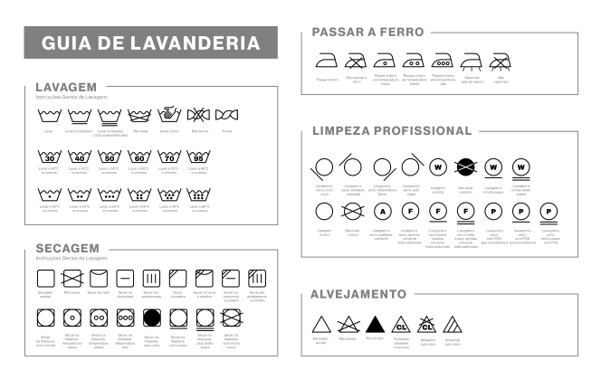
They typically indicate processes such as washing, bleaching, drying, ironing, and professional cleaning. Each category helps consumers understand which procedures are safe for a specific garment.
In general, the guidance may include:
Washing instructions should not be treated as a final production detail. They must reflect the garment’s composition, construction, finishing, and intended use.
A polyamide fabric, for example, may offer durability, a comfortable hand feel, and quick-drying performance, but it still requires proper care to preserve its attributes. Polyester fabrics can provide practicality, dimensional stability, and easy maintenance, depending on the selected construction.
Garments containing elastane also require attention. Elastane contributes to stretch, body fit, and freedom of movement, but may deteriorate when exposed to excessive heat or aggressive care processes.
Likewise, fabrics containing elastane need to maintain recovery, comfort, and drape. Care-label recommendations help keep the user experience aligned with the garment’s original design intent.
Each fiber, blend, and finish influences how a garment should be maintained. Its behavior during washing, drying, and ironing depends not only on appearance but also on textile engineering.
For this reason, washing symbols should reflect testing, technical expertise, and a clear understanding of the garment’s end-use application. A beachwear item, for example, may require different care than a casual T-shirt, even when both use synthetic fabric bases.
It is also important to consider the consumer’s routine. Garments that are difficult to maintain may create frustration, while easy-care products tend to be more highly valued.
In this context, wrinkle-resistant fabrics become an important advantage. They increase practicality, reduce the need for ironing, and improve convenience, particularly in travel, workwear, and everyday apparel.
Advances in textile technology have expanded product-development possibilities. Today, fabrics can be engineered with varying levels of stretch, breathability, durability, drying performance, structure, and hand feel.
A technical fabric can deliver benefits that go beyond aesthetics. It may provide softness, thermal comfort, mobility, durability, and improved adaptability to different wearing occasions.
However, these attributes must be preserved. When washing symbols guide consumers correctly, the technology built into the material has a greater chance of maintaining its performance over time.
This is especially important in categories such as beachwear, fitness, casualwear, uniforms, sportswear, and functional garments. In these segments, consumers expect products to keep up with their routines without rapidly losing comfort or appearance.

The care label is essential, but it does not need to be the only source of guidance. Brands that want to educate their audiences can transform textile care into simple, useful, and accessible content.
On product pages, packaging, blog posts, social media, and post-purchase materials, brands can explain washing symbols through practical examples. This reduces uncertainty and brings consumers closer to the garment’s technical aspects.
Some actions that improve communication include:
This communication also strengthens brand perception. Consumers begin to view the company as a partner in caring for their purchases.
Proper garment care directly influences consumer satisfaction. A garment that shrinks, loses shape, or quickly deteriorates often creates frustration, even when improper use is the cause.
Washing symbols help reduce this risk by informing consumers before mistakes occur. They function as a layer of protection for both the garment and the brand’s reputation.
For companies operating at scale, this guidance can impact important performance indicators. Fewer questions, complaints, and returns contribute to a more efficient operation.
Furthermore, proper garment preservation aligns with more conscious consumption. When products last longer, consumers get more value from their purchase and reduce the need for frequent replacements.
Many brands invest in design, marketing campaigns, and retail experiences but overlook textile care as part of their positioning. This represents a meaningful opportunity.
Explaining a garment’s composition, technology, and maintenance requirements helps demonstrate value. Consumers gain a better understanding of why a product performs the way it does and how to preserve its benefits.
Washing symbols can also support sales, customer-service, and e-commerce teams. When everyone understands care instructions, it becomes easier to answer questions and avoid inconsistent information.
This clarity is even more important for highly technical products. Fabrics with stretch, quick-drying capabilities, special hand feel, or thermal comfort must be communicated accurately so that consumers can recognize their advantages.
Selecting the right fabric base is a strategic decision. Before focusing exclusively on color, print, or design, brands need to evaluate which material delivers the intended consumer experience.
Texneo develops textile solutions for a wide range of applications, combining innovation, technology, quality, and market expertise. This combination helps brands create products that are better aligned with real-world use.
When fabric selection takes performance, comfort, and maintenance into account, the result is often more consistent. The garment communicates value from the first interaction and continues delivering quality over time.
Talk to Texneo specialists to discover which textile technologies can support the performance, comfort, and durability of your products.
More than technical information, washing symbols are part of the relationship between brand, product, and consumer. They help transform a purchase into a safer, longer-lasting, and more satisfying experience.
By incorporating washing symbols into collection planning, brands demonstrate attention to detail. This reinforces quality, reduces risk, and strengthens consumer confidence.
It is also important to remember that consumers do not always understand the characteristics of every fabric. Clear guidance is therefore an effective way to educate, protect, and add value.
In an increasingly competitive market, washing symbols help differentiate brands that think about the garment’s full lifecycle. From raw-material selection to after-sales support, every detail influences quality perception.
Transform textile technology into a valuable consumer experience with Texneo and develop products designed for performance, comfort, care, and durability.
That is why washing symbols play an important role for brands, apparel manufacturers, and consumers. They provide guidance on proper garment care and help preserve characteristics such as hand feel, stretch, color, drape, and performance.
When a garment maintains its appearance and functionality for longer, the brand also gains value. Consumers associate durability, ease of care, and comfort with a smarter purchasing decision.
This article explains how to interpret care labels, why they matter to the textile industry, and how they can enhance the experience of those who purchase and wear the product.
Why Care Labels Influence Quality Perception
Care labels create a bridge between a product’s technical development and everyday use. They show consumers how to wash, dry, iron, and care for garments properly.
When washing symbols are clear, the likelihood of mistakes decreases. This helps prevent shrinkage, distortion, color fading, premature wear, and changes in fabric hand feel.
For brands, this guidance is also strategic. A garment with clear care instructions tends to generate fewer complaints, fewer returns, and greater trust in the product.
In addition, care labels communicate professionalism. They show that the company has considered not only the aesthetics of the garment but also its performance after purchase.
How to Interpret the Main Care Categories
Although many people recognize basic care icons, they do not always understand their practical meaning. For this reason, washing symbols should be viewed as a visual language for textile care.They typically indicate processes such as washing, bleaching, drying, ironing, and professional cleaning. Each category helps consumers understand which procedures are safe for a specific garment.
In general, the guidance may include:
- Maximum washing temperature;
- Whether bleach can be used;
- Recommendations for tumble drying or line drying in the shade;
- Maximum ironing temperature;
- The need for professional cleaning;
- Special care requirements for delicate or technical fabrics.
Washing Instructions and Fabric Selection
Washing instructions should not be treated as a final production detail. They must reflect the garment’s composition, construction, finishing, and intended use.
A polyamide fabric, for example, may offer durability, a comfortable hand feel, and quick-drying performance, but it still requires proper care to preserve its attributes. Polyester fabrics can provide practicality, dimensional stability, and easy maintenance, depending on the selected construction.
Garments containing elastane also require attention. Elastane contributes to stretch, body fit, and freedom of movement, but may deteriorate when exposed to excessive heat or aggressive care processes.
Likewise, fabrics containing elastane need to maintain recovery, comfort, and drape. Care-label recommendations help keep the user experience aligned with the garment’s original design intent.
The Relationship Between Raw Materials and Garment Care
Each fiber, blend, and finish influences how a garment should be maintained. Its behavior during washing, drying, and ironing depends not only on appearance but also on textile engineering.
For this reason, washing symbols should reflect testing, technical expertise, and a clear understanding of the garment’s end-use application. A beachwear item, for example, may require different care than a casual T-shirt, even when both use synthetic fabric bases.
It is also important to consider the consumer’s routine. Garments that are difficult to maintain may create frustration, while easy-care products tend to be more highly valued.
In this context, wrinkle-resistant fabrics become an important advantage. They increase practicality, reduce the need for ironing, and improve convenience, particularly in travel, workwear, and everyday apparel.
Technical Fabrics, Comfort, and Maintenance
Advances in textile technology have expanded product-development possibilities. Today, fabrics can be engineered with varying levels of stretch, breathability, durability, drying performance, structure, and hand feel.
A technical fabric can deliver benefits that go beyond aesthetics. It may provide softness, thermal comfort, mobility, durability, and improved adaptability to different wearing occasions.
However, these attributes must be preserved. When washing symbols guide consumers correctly, the technology built into the material has a greater chance of maintaining its performance over time.
This is especially important in categories such as beachwear, fitness, casualwear, uniforms, sportswear, and functional garments. In these segments, consumers expect products to keep up with their routines without rapidly losing comfort or appearance.
How to Guide Consumers After Purchase
The care label is essential, but it does not need to be the only source of guidance. Brands that want to educate their audiences can transform textile care into simple, useful, and accessible content.
On product pages, packaging, blog posts, social media, and post-purchase materials, brands can explain washing symbols through practical examples. This reduces uncertainty and brings consumers closer to the garment’s technical aspects.
Some actions that improve communication include:
- Creating quick care guides by category;
- Explaining differences between synthetic, natural, and blended fabrics;
- Providing proper drying recommendations;
- Reinforcing care instructions for stretch garments;
- Demonstrating how to preserve color, hand feel, and drape;
- Including garment-care recommendations in after-sales communication.
This communication also strengthens brand perception. Consumers begin to view the company as a partner in caring for their purchases.
Garment Preservation and Fewer Returns
Proper garment care directly influences consumer satisfaction. A garment that shrinks, loses shape, or quickly deteriorates often creates frustration, even when improper use is the cause.
Washing symbols help reduce this risk by informing consumers before mistakes occur. They function as a layer of protection for both the garment and the brand’s reputation.
For companies operating at scale, this guidance can impact important performance indicators. Fewer questions, complaints, and returns contribute to a more efficient operation.
Furthermore, proper garment preservation aligns with more conscious consumption. When products last longer, consumers get more value from their purchase and reduce the need for frequent replacements.
How Brands Can Use Textile Care as a Differentiator
Many brands invest in design, marketing campaigns, and retail experiences but overlook textile care as part of their positioning. This represents a meaningful opportunity.
Explaining a garment’s composition, technology, and maintenance requirements helps demonstrate value. Consumers gain a better understanding of why a product performs the way it does and how to preserve its benefits.
Washing symbols can also support sales, customer-service, and e-commerce teams. When everyone understands care instructions, it becomes easier to answer questions and avoid inconsistent information.
This clarity is even more important for highly technical products. Fabrics with stretch, quick-drying capabilities, special hand feel, or thermal comfort must be communicated accurately so that consumers can recognize their advantages.
Texneo’s Role in Developing Better-Performing Products
Selecting the right fabric base is a strategic decision. Before focusing exclusively on color, print, or design, brands need to evaluate which material delivers the intended consumer experience.
Texneo develops textile solutions for a wide range of applications, combining innovation, technology, quality, and market expertise. This combination helps brands create products that are better aligned with real-world use.
When fabric selection takes performance, comfort, and maintenance into account, the result is often more consistent. The garment communicates value from the first interaction and continues delivering quality over time.
Talk to Texneo specialists to discover which textile technologies can support the performance, comfort, and durability of your products.
Textile Care as Part of the Consumer Experience
More than technical information, washing symbols are part of the relationship between brand, product, and consumer. They help transform a purchase into a safer, longer-lasting, and more satisfying experience.
By incorporating washing symbols into collection planning, brands demonstrate attention to detail. This reinforces quality, reduces risk, and strengthens consumer confidence.
It is also important to remember that consumers do not always understand the characteristics of every fabric. Clear guidance is therefore an effective way to educate, protect, and add value.
In an increasingly competitive market, washing symbols help differentiate brands that think about the garment’s full lifecycle. From raw-material selection to after-sales support, every detail influences quality perception.
Transform textile technology into a valuable consumer experience with Texneo and develop products designed for performance, comfort, care, and durability.
 Go back